
Practical guide · 5 min
How to Build a Puerto Rican Coffee Bar at Home without Buying Useless Gear
Build a functional coffee bar with one method, storage and a repeatable routine before adding décor.
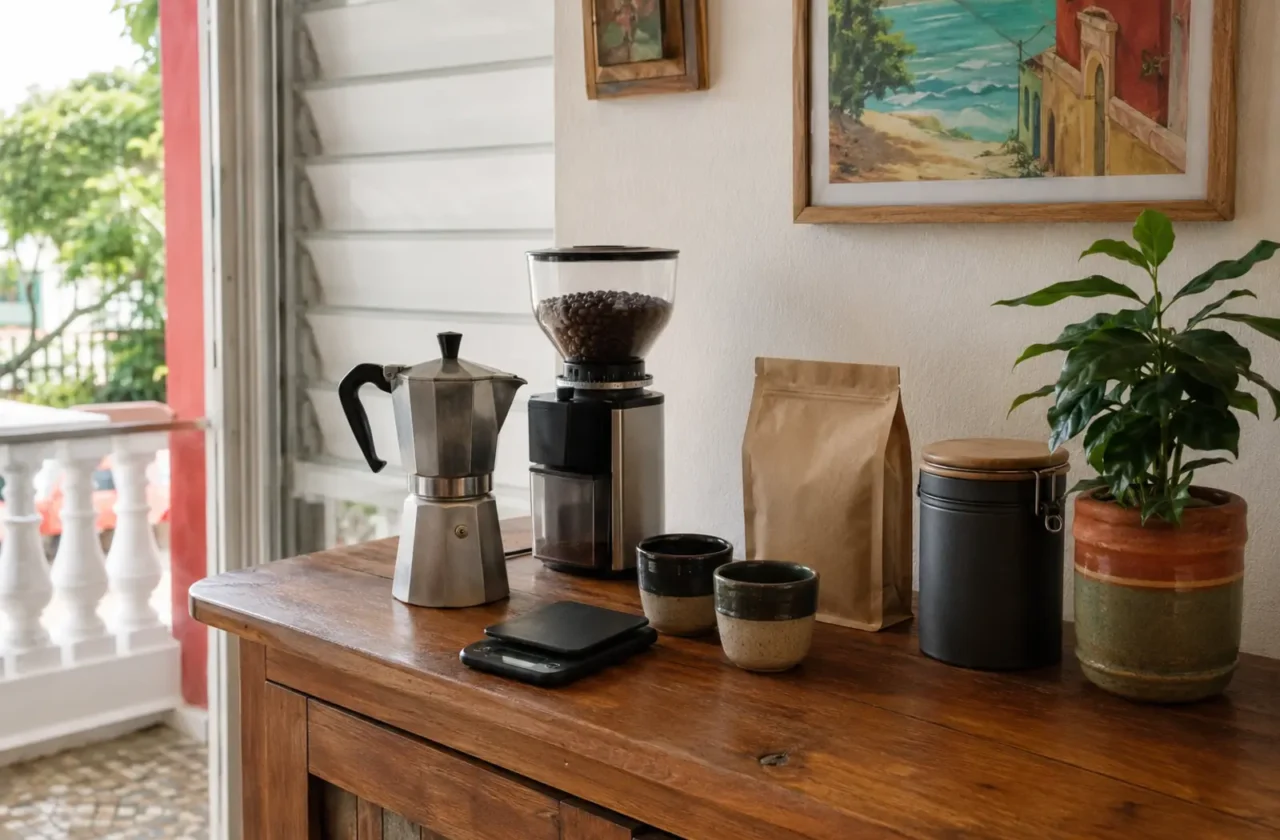
A Puerto Rican coffee bar at home does not need an expensive machine or a wall of accessories. It needs one method you use, properly stored coffee, appropriate water and a repeatable routine. Solve brewing and cleaning first; then add identity through beans, a family recipe, ceramics or travel memories. Function protects the budget and makes every object earn its place.
Choose one principal method
A moka pot produces concentrated coffee and connects with many Boricua kitchens. A drip machine works for several cups. French press offers body; manual filter offers control; espresso demands investment and practice. Choose by quantity, time and flavor rather than videos. Use the method for a month before purchasing another.
Buy a grinder only when you will use it
Whole beans preserve aroma longer, but an inconsistent grinder adds frustration. If convenience matters more, buy the correct pre-ground coffee in moderate quantities. When grinding, burrs generally provide more uniform particles than blades. Clean according to directions and never use rice if the manufacturer prohibits it.
Organize a dry, safe zone
Place equipment away from the sink, steam and counter edge. Leave room to open lids and pour water. Cables should not cross wet areas. Keep coffee in an opaque closed container away from the oven. A tray contains spoons and spills but requires regular cleaning.
Improve water before changing machines
A cup is mostly water. If tap water has a strong odor or unpleasant flavor, use appropriate filtration. Avoid pure distilled water for daily brewing because extraction needs minerals. Keep the ratio between coffee and water consistent. A simple scale may solve more than a decorative accessory.
Create a bilingual recipe station
Keep cards for moka pot, café con leche, cortadito, shakerato and limber. Write dose, water, time and result. The same recipe in Spanish and English turns the bar into a place of family history and hospitality. Add your own QR code to the story archive when guests want to explore.
Buy coffee according to consumption
One or two open bags are enough for comparison. Write the opening date and finish one before multiplying inventory. Look for clear origin and grind. If a brand does not ship reasonably to your area, choose another instead of paying disproportionate costs. Cafés de PR directs buyers to outside merchants and does not control inventory, payment or returns.
Add identity without clutter
Use an artisan cup, small map, Passport or your own responsibly made photograph. Avoid filling the zone with exposed beans; they lose freshness and collect dust. Decorative beans should never return to the grinder. Keep workspace free.
A four-stage improvement plan
- Method, coffee, water and cleaning.
- Grinder or the correct pre-ground coffee.
- Scale, storage and recipes.
- A special accessory only after identifying a need.
This order turns purchases into solutions rather than collecting.
Build the bar step by step
Compare equipment, explore Puerto Rican coffee and use the Passport to record each new bag.
Weekly and monthly maintenance
Each week, wash containers, clean surfaces and inspect the grinder for trapped beans. Empty standing water and dry parts before assembly. Monthly, inspect moka-pot seals, mineral accumulation and electrical cables. Follow manufacturer directions for descaling.
Keep a small cabinet card with dose and tasks. Another person can then produce a similar cup without depending on memory. Store cleaning products separately from coffee and utensils.
Evaluate the bar after thirty brews. Remove objects that were never used, replace only what fails and direct budget toward fresh coffee or education. A station evolving from real habits remains attractive because it stays clear, safe and active.
Home-bar questions
How much space do I need?
Enough to brew and clean safely. One organized tray can work in a small kitchen.
What should I buy first?
Begin with a method, appropriate coffee, water and storage. Add a grinder later when whole beans fit the routine.
How do I avoid collecting equipment?
Use a thirty-brew rule: do not add another method until using the current one thirty times and identifying a concrete need.